
When people talk about “beating the algorithm,” they usually mean cracking the code behind Google’s ranking system. But here’s the truth: the core hasn’t really changed. Google still rewards relevance, authority, and user experience; it’s just gotten much better at identifying what those signals actually look like.
If you want your site to perform in today’s search landscape—and stay visible through future updates—you need to understand how Google measures those signals now. Let’s break down what really matters, what’s changed, and how to align your SEO strategy accordingly.
1. Relevance Still Starts With Intent
Google’s main job hasn’t changed: match a search query to the most helpful result. What has changed is how much better it’s gotten at understanding searcher intent—thanks to AI, machine learning, and context-aware models.
Today, the pages that win:
- Clearly address the search query at the top
- Use natural language to reinforce the topic throughout
- Stay focused on fulfilling the promise of the title
Tip: Start with keyword research tools like Semrush or Ahrefs to understand how people phrase their queries. Then map that intent to your content hierarchy, your H1s, H2s, meta descriptions, and even image alt text.

2. Authority Is Earned, Not Declared
Backlinks still matter—a lot. But it’s not just about volume anymore. Google now evaluates:
- Source quality: Is the referring site reputable and relevant?
- Link context: Does the link sit within meaningful content, or was it shoehorned in?
- Topical authority: Are you consistently covering your niche with depth and accuracy?
One strong link from a trusted publication or niche blog can outweigh dozens from generic directories.
That’s where E-E-A-T (Experience, Expertise, Authoritativeness, and Trustworthiness) comes in. Google wants to rank:
- Pages written by people with firsthand experience
- Sites that cite reliable, up-to-date sources
- Content backed by transparent editorial standards
You can’t fake this. But you can build it with:
- Real case studies
- Original research or survey data
- Expert quotes and bylines with credentials
3. User Experience Is the New Baseline
A site that’s hard to use doesn’t just frustrate people, it also underperforms in search.
Google’s Core Web Vitals measure:
- Largest Contentful Paint (LCP): How fast the main content loads
- Interaction to Next Paint (INP): How quickly the page responds to clicks/taps
- Cumulative Layout Shift (CLS): How stable the layout is during load
Speed matters. So does mobile responsiveness, HTTPS security, and ease of navigation. These factors won’t make a weak page rank #1, but they can tip the scale between two equally strong competitors.
Bonus: Google watches what people do after landing on your page. High bounce rates, quick exits, and lack of engagement are red flags. On the flip side, when users scroll, click, and explore deeper, that’s a sign your content is delivering.
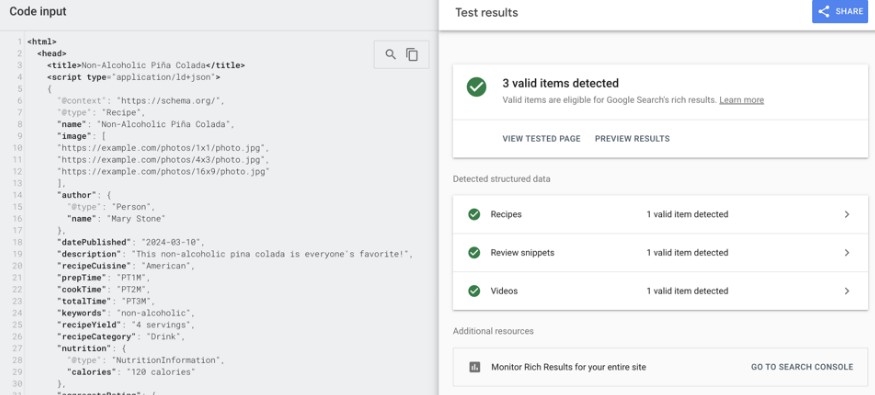
4. Structured Data Helps Google Understand You Faster
Structured data (a.k.a. schema markup) gives search engines context. It tells Google what your page is about, not just what it says.
Examples:
- Product pages with price and availability info
- Articles tagged with author, publish date, and topic
- FAQs and How-Tos with proper markup
While structured data doesn’t guarantee a rankings bump, but it does:
- Increase eligibility for rich snippets
- Improve AI assistant understanding (especially in SGE results)
- Build trust with clearer, more informative listings
Use Google’s Structured Data Testing Tool to make sure your markup is valid.
5. Freshness Needs More Than a New Date
Google favors fresh content for queries tied to trends, breaking news, or evolving advice, but a quick timestamp update doesn’t cut it.
What works:
- Adding new data, stats, or tools
- Replacing outdated screenshots
- Addressing emerging subtopics or FAQs
Regularly updating cornerstone content signals that your site is active, accurate, and trustworthy.

6. Location and Personalization Shape Final Rankings
Search isn’t the same for everyone anymore. Your location, device, language, and even past searches influence what you see.
For local SEO, that means:
- Optimizing Google Business Profile listings
- Using consistent NAP (Name, Address, Phone) details
- Creating localized landing pages with unique content
For broader reach, it means tailoring experiences for different devices and user contexts—especially mobile and voice search.
Why Understanding Ranking Factors Matters More Than Ever
AI-generated summaries, zero-click results, and personalized SERPs have all changed how search results appear. But the rankings underneath those features still depend on traditional signals: content quality, link equity, user satisfaction, and site health.
If your content feeds the answers powering AI snippets, your visibility increases—even if the format changes.
How to Apply Google Ranking Factors to Your Strategy
Improving your search presence isn’t about checking every box—it’s about focusing on what truly matters for your audience and content type.
Start by:
- Matching content to real searcher intent
- Building authority with trusted, earned backlinks
- Optimizing for performance and UX
- Enhancing clarity with structured data
- Keeping content updated and relevant
- Localizing where it counts
If you consistently provide helpful, trustworthy, and technically sound content, Google will continue to show you in results—regardless of algorithm updates.
Master Google Ranking Factors With Menerva Digital
At Menerva Digital, we help businesses turn complex ranking factors into clear strategies that grow traffic and revenue. From content strategy and technical SEO to online authority and user experience, we connect the dots so your site performs. Let’s build your roadmap to better rankings, stronger visibility, and long-term growth in a search landscape that never stops evolving.