
If your dashboards show flat organic clicks but leadership still asks for more pipeline, you’re seeing the new reality of search. Google’s AI Overviews and chat-style answer engines summarize first and link second. Buyers aren’t researching less; they’re just learning more before ever reaching your site.
For B2B software and cybersecurity marketers, the play isn’t to fight the interface. The goal is to create content that both your buyers and AI systems can trust.
This is your field guide, built for CMOs, VPs of Marketing, and Digital Marketing Directors, to adapt strategy, focus team efforts, and see real results in one quarter.
What AI Overviews Change (and What They Don’t)
AI Overviews compress an entire page of results into a fast, scannable summary with links to go deeper. AIO impacts:
Discovery shape. More questions are answered before the click, meaning top-of-funnel learning now happens right on the SERP.
Source selection. AI models pull from pages that are clear, specific, and easy to quote. Your job is to be that source.
What hasn’t changed: buyers still need proof, evaluation tools, and detail before they shortlist you. Win the citation and deliver depth? You win twice.

From SEO to AIO: The Tactical Shift
Classic SEO is still the foundation. But AIO (Answer Engine Optimization) is the new layer.
Say who it’s for, up front. Open every page with a clear line naming the reader and the use case. Ex: “This guide explains zero-trust email security for enterprise IT leaders.” That helps both humans and AI understand context immediately.
Lead with the answer. Start each section with a short, 2-3 sentence summary. If it fits, open with “Yes,” “No,” or “It depends—here’s why.”
Replace vague claims with sourced facts. Specific, time-stamped data wins citations. If something moves fast (like regulatory guidance), update it frequently.
Quote named experts. Put actual subject-matter expertise on the page—with name, title, and company. Take it a step further by
Structure it cleanly. Use clear H2s, well-formatted FAQs, and tables where they help. Make it easy to lift, summarize, and cite.
These small editorial moves make your content more AI-friendly and more compelling to read.

How a CMO Scales This Across a Complex Portfolio
Trying to “fix everything” leads to burnout and bottlenecks. Menerva Digital uses a proven workflow with B2B security and software brands that focus on repeatable systems.
Step 1: Quarterly Gap Analysis by Product Line
Each quarter, teams run a gap analysis across 5-6 products. Product marketing shares campaign briefs (personas, positioning, priorities). SEO maps that to search behavior, uncovering where visibility is strong and where it’s missing.
The outcome: a content roadmap tied to the pipeline, not generic traffic.
Step 2: Briefs Built for The Way Answers Appear
Each new page or update gets a detailed brief that reflects how users and AI systems explore topics:
- SERP features like answer boxes
- Top 5 organic results
- Long-tail variations
- Prompt-led ideation in ChatGPT (to find real follow-up questions)
The goal isn’t to chase keywords. It’s to cover the conversation thoroughly.
Explore our full guide on ChatGPT prompts for SEO to see practical examples you can use right away.
Step 3: Writers Who Know the Landscape
Writers and strategists familiar with cybersecurity (and the buyer journey) create glossary explainers, migration guides, and comparison pages that don’t break brand tone.
Edits are precise:
- Add a tighter opening for CISOs
- Insert a summary under “How DMARC enforcement works”
- Include an expert POV on false-positive trade-offs
- Expand the FAQ with fully written responses
Step 4: Global From Day One
Localization isn’t just translation. The team:
- Analyzes market-specific keyword data
- Selects locally relevant topics
- Translates with nuance into 8+ languages
The result: A page that reads natively in German, not like an American page run through DeepL.
What This Looks Like in Practice: Proofpoint
Proofpoint is an enterprise cybersecurity company with a global footprint. Since 2018, they’ve partnered with Cassandra Gucwa and Menerva Digital to run this exact model:
- Quarterly gap analysis
- PMM-aligned briefs
- High-authority content by domain experts
- SEO + AIO + localization baked in
The results?
- +139% YoY increase in global organic traffic (1M+ new visits)
- +66% increase in organic-attributed sales pipeline
- Recognition from Search Engine Land Awards and U.S. Search Awards
None of this came from a one-time campaign. It came from consistent execution, quarter after quarter.
New Metrics for a New Interface
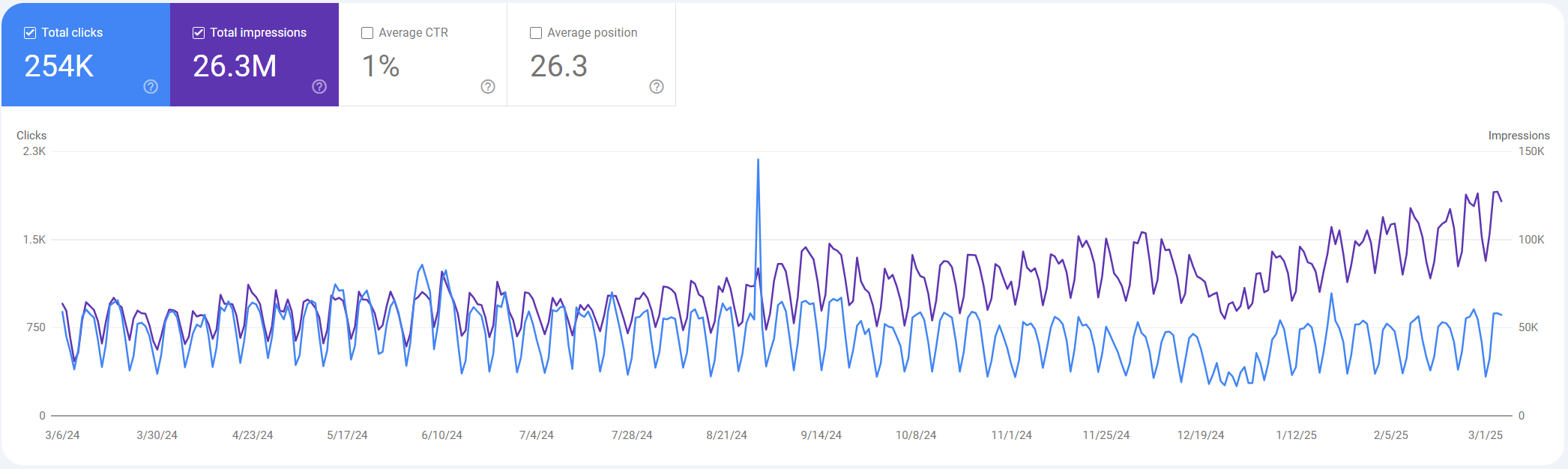
If you’re still reporting “organic sessions” as your only SEO metric, you’re missing the bigger picture. AI Overviews require new ways of measuring success:
Impressions = surface area. Track question-style queries and persona-based searches. Rising impressions show you’re getting visibility, even if clicks lag.
AI/LLM referrals. Create a GA4 channel for traffic from Perplexity, Gemini, Copilot, ChatGPT, etc. It’s small now, but it won’t be for long.
Citation presence. Measure the share of queries where your brand or page is mentioned, even without a click.
Pipeline impact. Tie refreshed content to assisted opps—not just direct conversions.
This is the narrative boards care about: Are we visible where research happens? Does it connect to revenue?

A 90-Day Plan for B2B CMOs
- Weeks 1–2: Pick the battleground.
- Choose 2–3 high-priority product lines. Align with PMM on personas and top 10 evaluation questions.
- Weeks 3–6: Run the gap analysis and brief work.
- Map SERP visibility, prioritize content gaps, and build briefs for new and updated content.
- Weeks 7–10: Ship AIO edits and localizations.
- Update pages with clear openings, answer-first sections, expert POVs, and localized versions in two markets.
- Weeks 11–13: Measure, tune, repeat.
- Track impressions, AI referrals, and validate with PMM. Roll insights into Q2’s plan.
You don’t need to boil the ocean. You need to move precisely on the pages that matter.
Why AI Overviews Matter Now
Your buyers are under pressure: prove ROI, move faster, de-risk the shortlist.
AI Overviews don’t kill due diligence—they just compress it. Brands that publish expert-backed, quote-ready content get the link, the trust, and the shortlist.
The model is clear: regular analysis, briefs that match discovery, experts on the page, and local nuance from day one.
Want to Build an AIO-Ready Program?
Menerva Digital helps B2B software and cybersecurity teams build content systems that drive pipeline, not just keyword rankings. Want to know where your product lines are missing from the conversation, and how quickly you can close the gap? Let’s talk.