Search visibility tells you how often your site shows up in search results when people look for things you want to be found for. It’s not the same as rankings, and it’s not the same as traffic either. It’s more of a percentage of how much ground you’re actually covering based on the keywords that matter to your business.
If your visibility score is high, it means you’re showing up for most of the terms you want to rank for. If it’s low, your pages probably aren’t being seen. You might be getting outranked by competitors or missing chances to show up in the first place.
That’s why visibility is worth watching. It tells you whether you’re even part of the conversation when your audience is searching.

How is Search Visibility Calculated?
Different platforms use slightly different formulas, but the core idea is the same. Search visibility takes into account your rankings across a set of keywords, then weights them by search volume and position. Higher-ranking keywords count more than lower-ranking ones. So do keywords with higher search volume.
If you rank #1 for a high-volume term, your search visibility score goes up. If your rankings drop or disappear, your search visibility score decreases. Visibility is a reliable way to monitor overall performance, even though traffic will fluctuate day to day.
Why Search Visibility Matters More Than Traffic Alone
Traffic tells you what’s happening right now. Search visibility tells you whether your strategy is working.
A brand might see steady traffic from a handful of high-performing blog posts. But if visibility is low, it means you’re missing out on a broader audience. You’re showing up in fewer search results than your competitors. That makes you harder to find.
Visibility is also useful when tracking the impact of a campaign. If you launch new pages or optimize old ones, you will usually see an increase in visibility before an increase in clicks. It can also help diagnose a performance drop. If visibility falls, traffic usually follows.
Where to Find Your Search Visibility Metrics
Most SEO tools include a search visibility score. It’s usually available in your rank tracking dashboard. Here’s how it works in a few common platforms:
- Ahrefs: The “visibility” percentage in the Rank Tracker shows how many clicks you’re earning from tracked keywords.
- SEMrush: The “visibility” metric in Position Tracking shows the estimated percentage of impressions your domain gets.
- Google Search Console: While it doesn’t label anything “visibility,” you can calculate it by looking at impressions and average position for key pages or queries.
For accuracy, your keyword list in tracking tools needs to reflect your actual keyword strategy. If you only track 10 branded terms, your score won’t mean much. The more complete your keyword set, the more useful your visibility score becomes.
How to Improve Search Visibility
Improving your search visibility isn’t just about ranking higher for the same terms. It’s also about showing up for more of the right searches. Here’s how to move the needle.
Audit your keyword coverage
Start by looking at what you’re already ranking for, then compare it to what your audience is actually searching for. Are there any gaps in your coverage? Are there related questions, subtopics, or intent-specific keywords you’re missing?
A content gap analysis can also help. Tools like Ahrefs and SEMrush can show you which keywords your competitors rank for that you don’t. Prioritize the terms that align most with your business and show signs of commercial or informational intent.
Update and expand content
If a page used to rank and doens’t anymore, check for signs of content decay. Are the stats outdated? Does it answer the question thoroughly? Is the formatting hard to skim? Have you considered your readers, not just search engines?
Improving existing pages can sometimes be faster than creating new ones. Adding examples and statistics, clarifying your point of view, and tightening structure can all help search engines re-evaluate the page and improve your ranking.
Use internal linking to boost relevance
Internal links help search engines understand which pages matter most. They also guide users to related content, increasing engagement. Both signals can help improve visibility.
Make sure your most important pages are linked to from other relevant pages on your site. Use descriptive anchor text, not generic terms like “click here.”
Address technical issues
Search visibility also depends on whether your site can be crawled and indexed correctly. If pages are blocked, slow, or inconsistent with their metadata, search engines may overlook them.
Run regular technical audits and fix high-impact issues like:
- Duplicate title tags
- Missing meta descriptions
- Slow load times
- Crawl errors
- Inconsistent schema markup
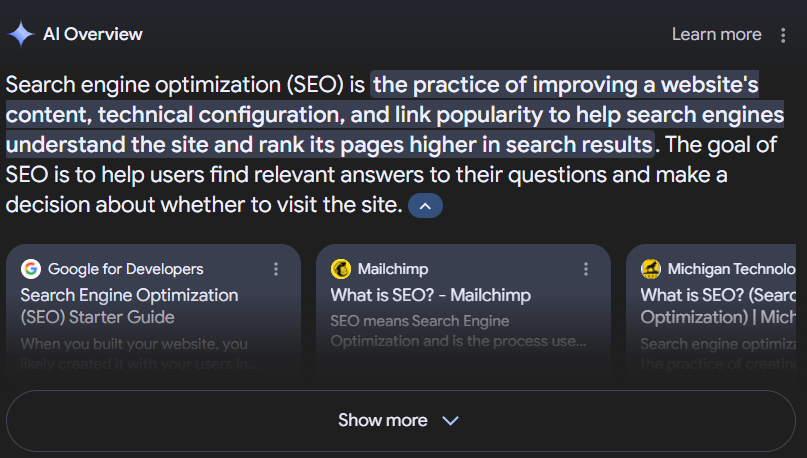
Target New Featured Snippets and AI Overviews
Search visibility in the new age of AI goes beyond traditional organic listings. Featured snippets, AI-generated summaries, and “people also ask” boxes are now just as important as the search results page. If your content isn’t being delivered in those areas, you’re missing a major part of the visibility equation.
To compete, structure your content for clarity with subheadings that match common questions and write in a way that solves problems by giving clear, useful answers. The goal is to make it easy for search engines to surface your content in multiple formats, not just on the main results page.
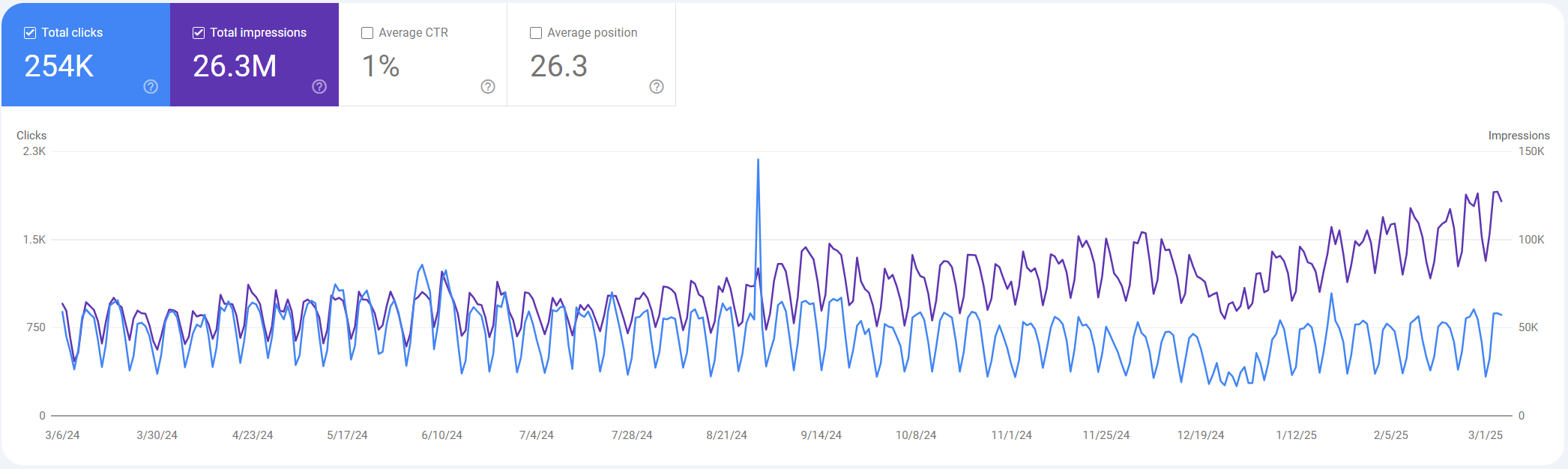
Monitor Performance and Adjust
Visibility is not static. Rankings shift, competitors publish, and algorithms evolve. Keep an eye on your core set of keywords and make adjustments when trends emerge.
If a page drops out of the top 10, review the article that replaced it to determine why it handles the topic better. If a topic gains traction, consider building a full content cluster around it. Visibility grows when your content remains relevant.
Search Visibility Tracks Progress That Rankings Can’t
Search visibility gives you a more complete picture of your SEO health. Instead of tracking a single keyword, you see how well your site shows up across an entire topic set.
A visibility score that climbs month after month means your strategy is working. One that stalls or drops can be a sign you’re falling behind and need to update your overall content strategy.
Need help improving your visibility? Contact us today.